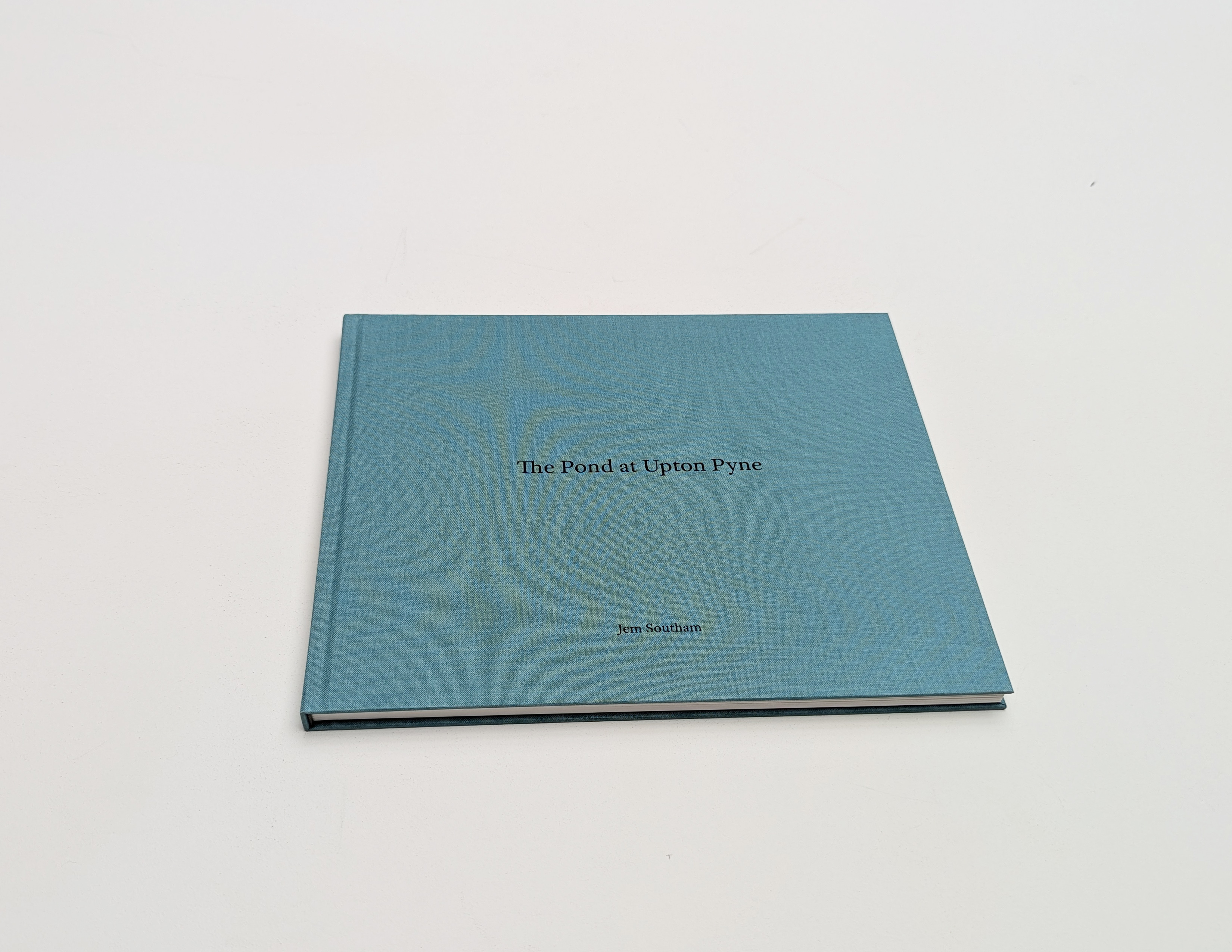
The Pond at Upton Pyne
Jem Southam
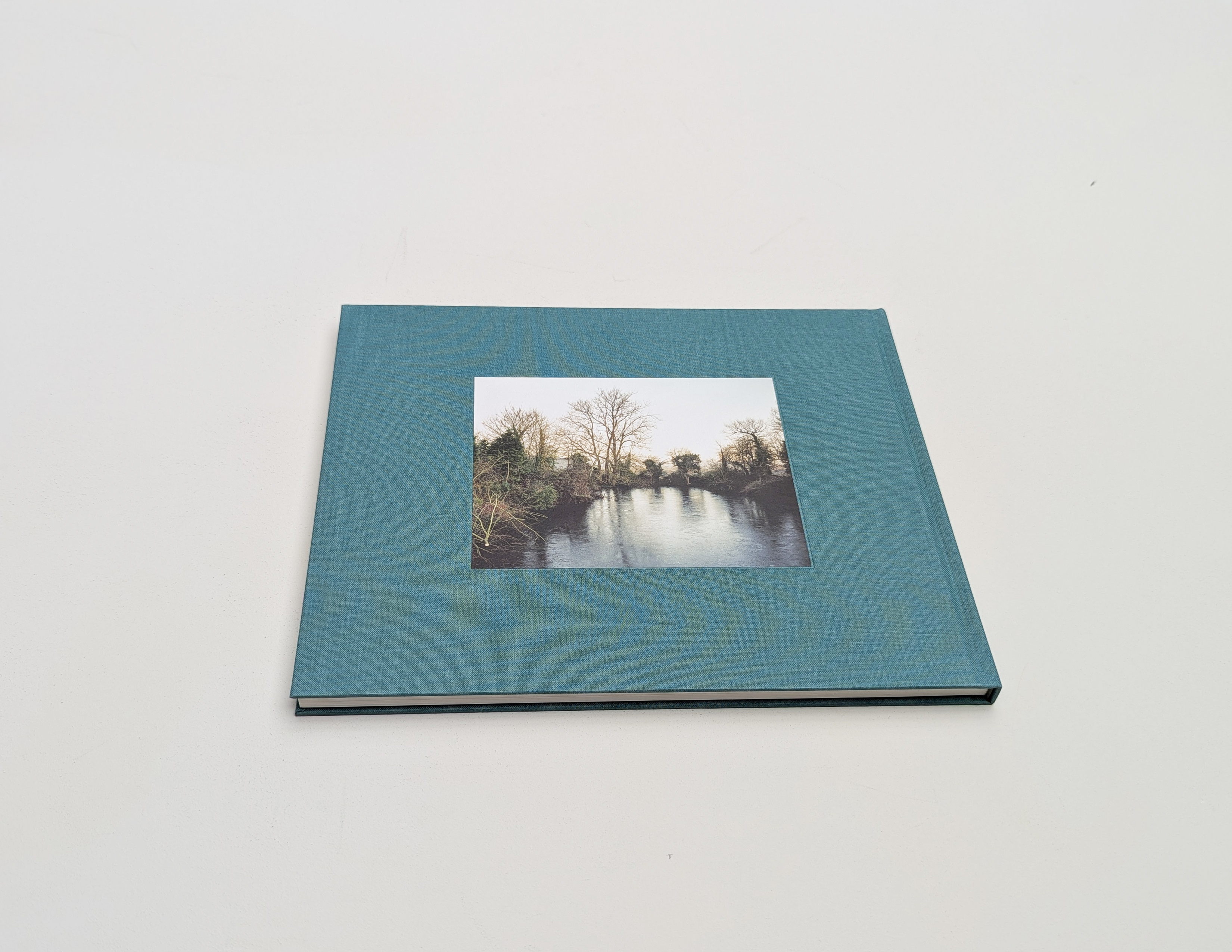
The pond at Upton Pyne formed at the site of an eighteenth-century manganese mine. Located on land owned by a local family who were involved in the mining venture, the first excavations began in March 1788. After a bright start the output of the mine steadily diminished and by 1823 it had ceased production, leaving a large pit. Known locally as ‘The Black Pit’, it gradually filled with water to form a pond.
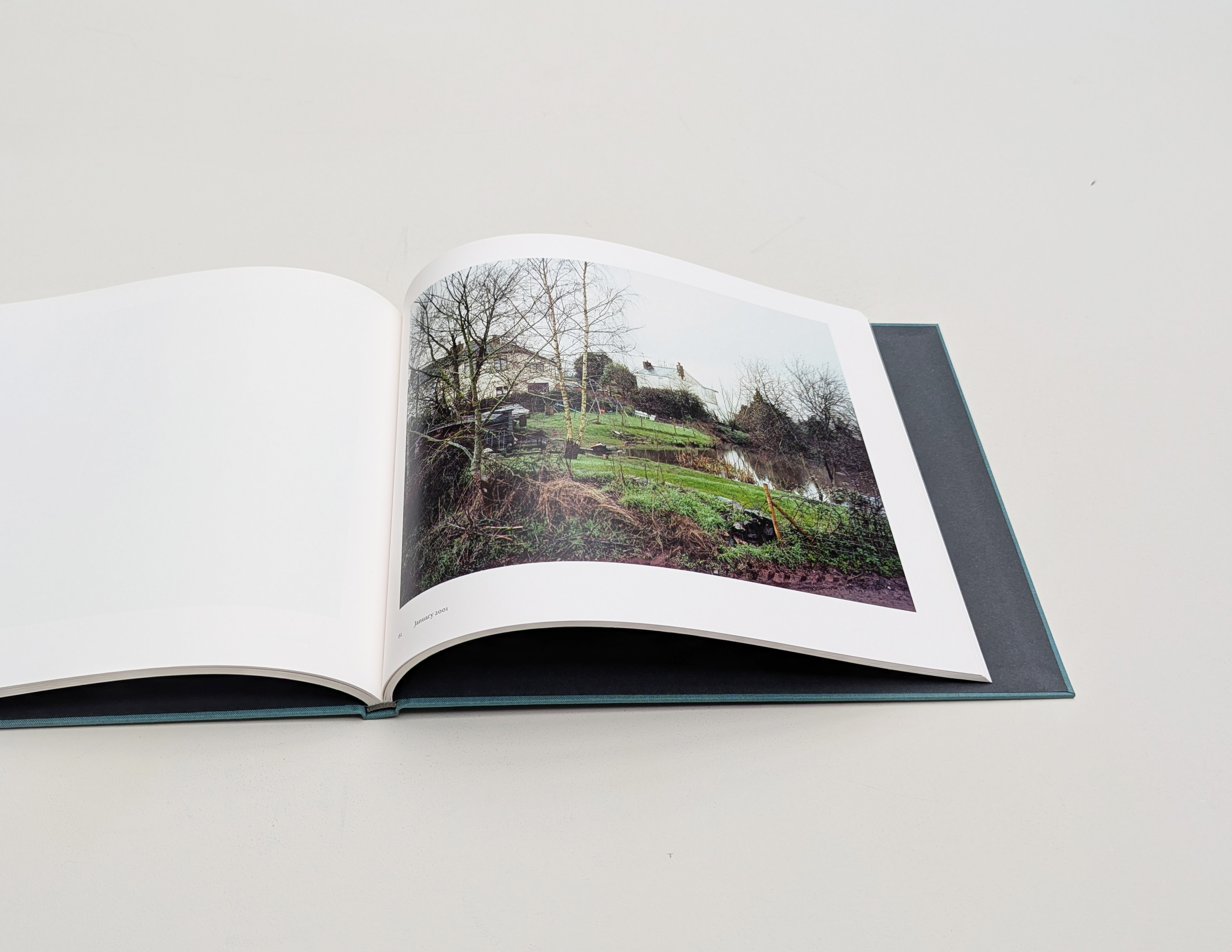
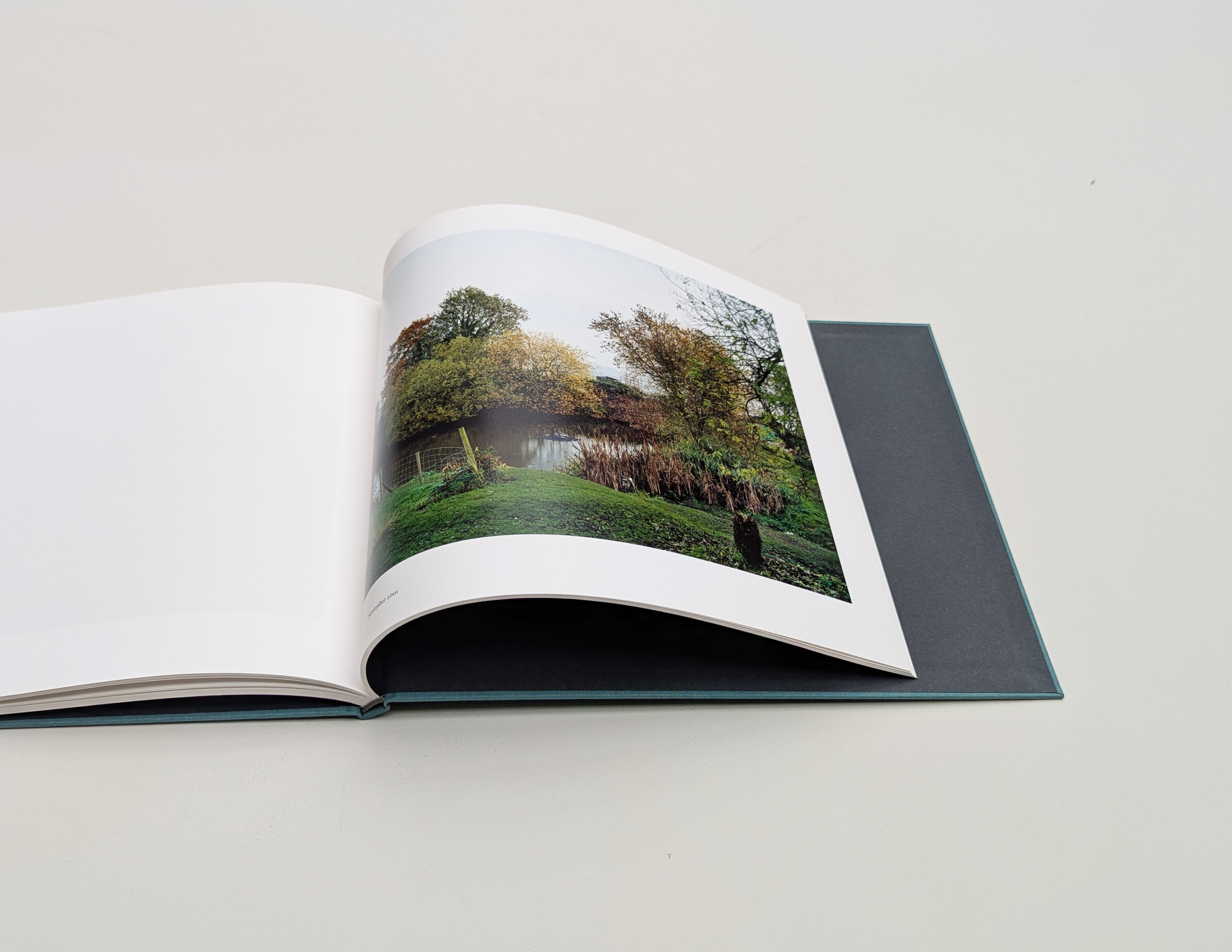
Within the span of the six years the pond had risen and fallen, trees had collapsed while others grew, herons and a kingfisher had returned, the roof of the shed adjacent to the pond had fallen in, the collection of farm machinery had grown, and the number of ducks living in and around the pond had significantly increased.
The pictures present a collection of histories. Within the broad sweep of time they encompass a thousand years of a large estate on the borders of a city that has since Roman times been a regional capital; the comings and goings of the Industrial Revolution; the decline of agricultural life with the advent of modern farming; and the urbanisation of village life.
Imagebeeld Edition
2024
Hardcover
104 pages
£50
Enquire
Jem Southam
The pond at Upton Pyne formed at the site of an eighteenth-century manganese mine. Located on land owned by a local family who were involved in the mining venture, the first excavations began in March 1788. After a bright start the output of the mine steadily diminished and by 1823 it had ceased production, leaving a large pit. Known locally as ‘The Black Pit’, it gradually filled with water to form a pond.
Within the span of the six years the pond had risen and fallen, trees had collapsed while others grew, herons and a kingfisher had returned, the roof of the shed adjacent to the pond had fallen in, the collection of farm machinery had grown, and the number of ducks living in and around the pond had significantly increased.
The pictures present a collection of histories. Within the broad sweep of time they encompass a thousand years of a large estate on the borders of a city that has since Roman times been a regional capital; the comings and goings of the Industrial Revolution; the decline of agricultural life with the advent of modern farming; and the urbanisation of village life.
Imagebeeld Edition
2024
Hardcover
104 pages
£50
Enquire