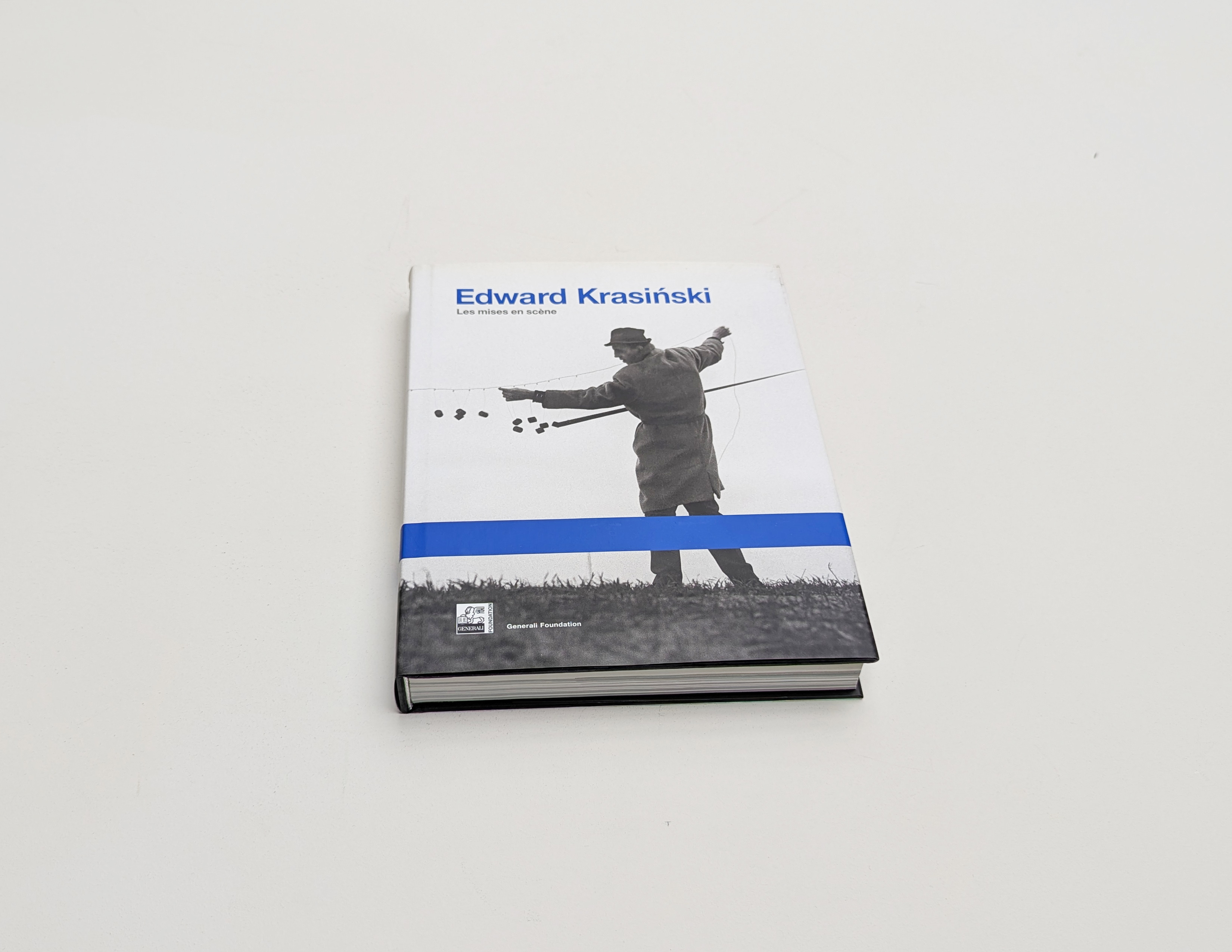
Les mises en scene
Edward Krasinski
Publication to the exhibition from May to August 2006.
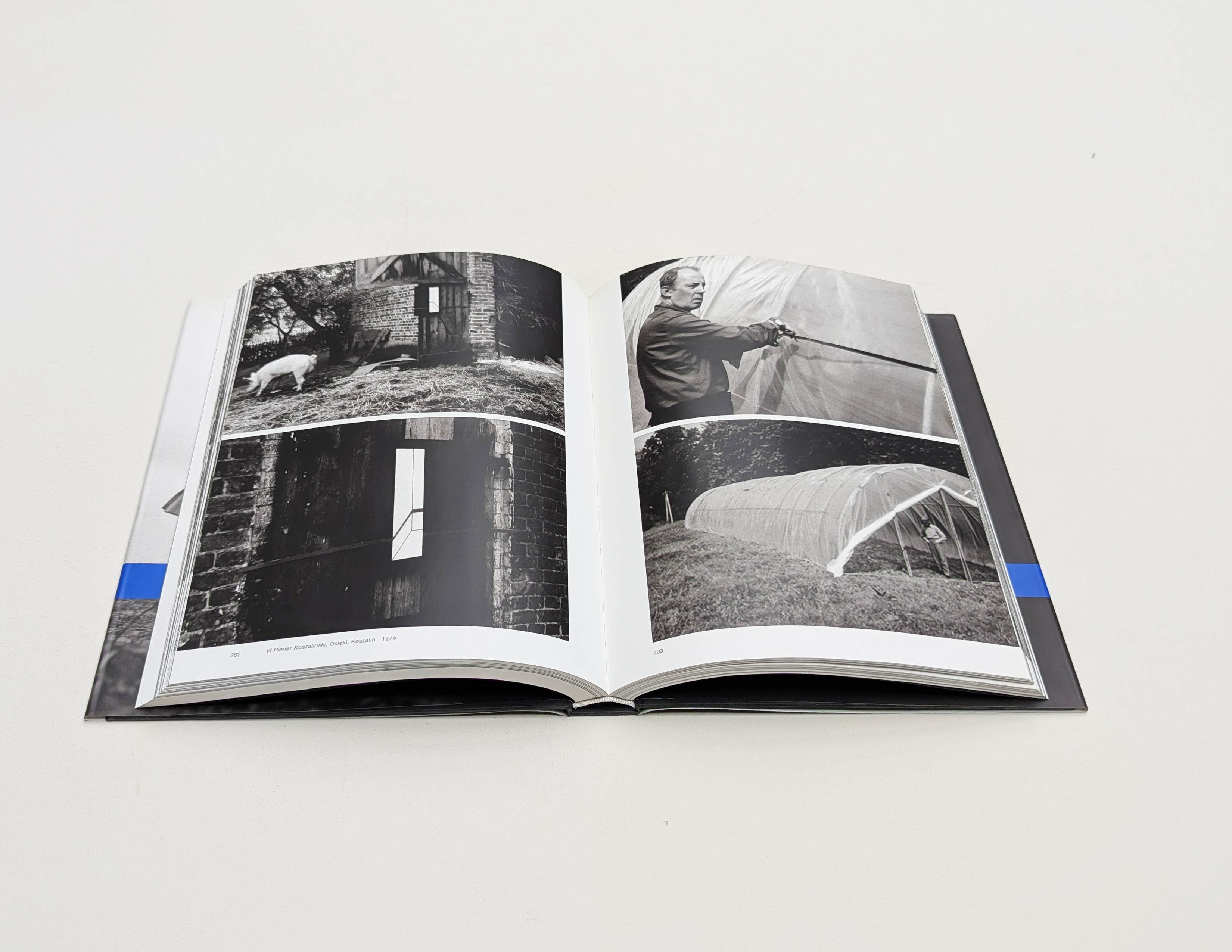
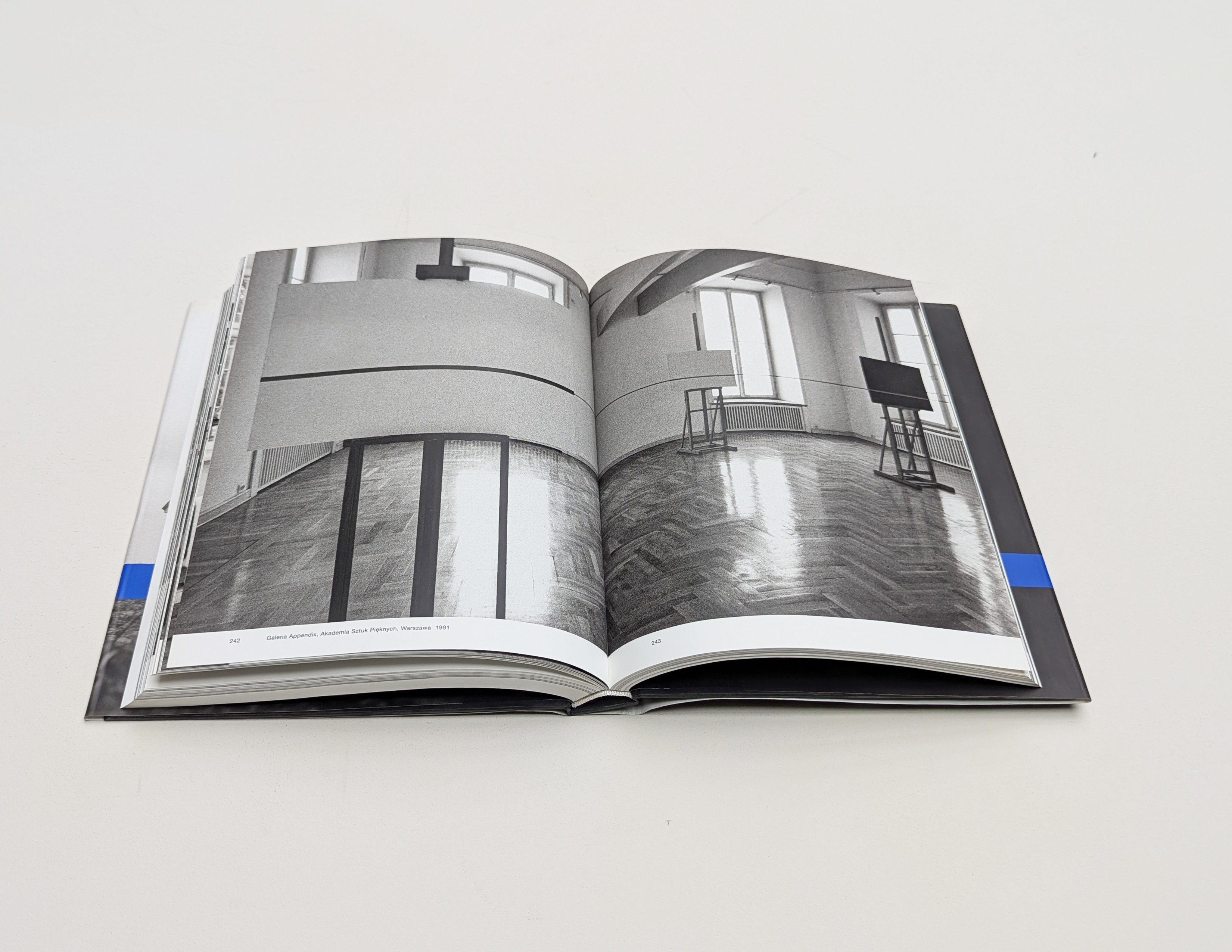
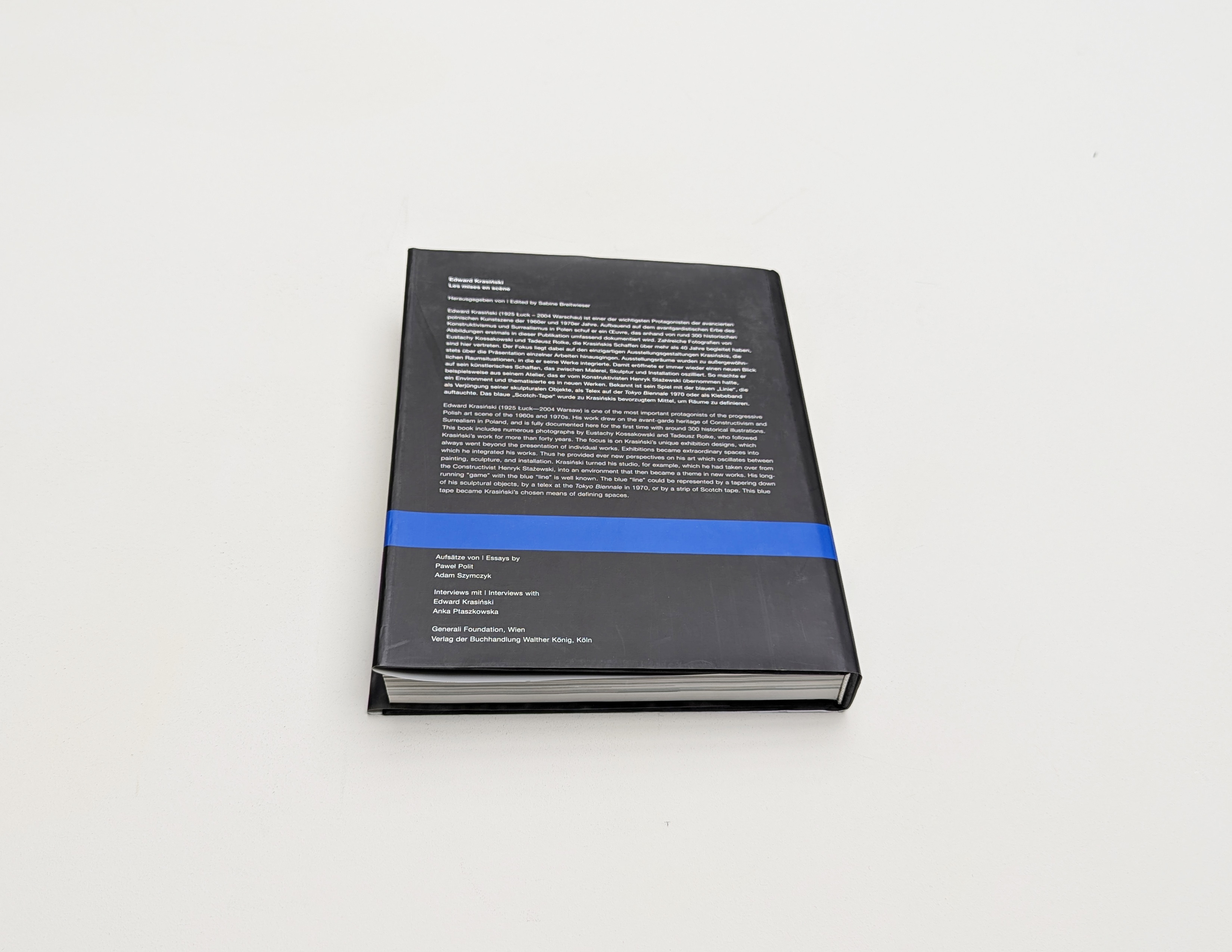
Edward Krasiński is one of the most important protagonists of the Polish art scene of the 1960s and 1970s. His work drew – Proposal: is based/is founded on the avant-garde heritage of Constructivism and Surrealism in Poland, and is fully documented here for the first time with around 300 historical illustrations. This book includes numerous photographs by Eustachy Kossakowski and Tadeusz Rolke, who followed Krasiński's work for more than forty years.
The focus is on Krasiński's unique exhibition designs, which always went beyond the presentation of individual works. Exhibitions became extraordinary spaces into which he integrated his works. Krasiński turned his studio, for example, which he had taken over from the constructivist Henryk Stażewski, into an environment that then became a theme in new works. His long-running “game” with the blue “line” is well known. The blue “line” could be represented by a tapering down of his sculptural objects, by a telex at the Tokyo Biennale in 1970, or by a strip of Scotch tape. This blue tape became Krasiński's chosen means of defining spaces.
Generali Foundation
2006
Hardcover
352 pages
£40
Enquire
Edward Krasinski
Publication to the exhibition from May to August 2006.
Edward Krasiński is one of the most important protagonists of the Polish art scene of the 1960s and 1970s. His work drew – Proposal: is based/is founded on the avant-garde heritage of Constructivism and Surrealism in Poland, and is fully documented here for the first time with around 300 historical illustrations. This book includes numerous photographs by Eustachy Kossakowski and Tadeusz Rolke, who followed Krasiński's work for more than forty years.
The focus is on Krasiński's unique exhibition designs, which always went beyond the presentation of individual works. Exhibitions became extraordinary spaces into which he integrated his works. Krasiński turned his studio, for example, which he had taken over from the constructivist Henryk Stażewski, into an environment that then became a theme in new works. His long-running “game” with the blue “line” is well known. The blue “line” could be represented by a tapering down of his sculptural objects, by a telex at the Tokyo Biennale in 1970, or by a strip of Scotch tape. This blue tape became Krasiński's chosen means of defining spaces.
Generali Foundation
2006
Hardcover
352 pages
£40
Enquire